
Regarding fluid transfer and vacuum applications, rotary vane pumps and rotary lobe pumps are two of the most reliable options. At Stephenson Pumps, we specialize in providing the best rotary lobe pump solutions and high-performance rotary vane pumps tailored to your needs. In this blog, we’ll explore how these pumps work, their differences, and how to maintain them for optimal performance.
What is a Rotary Vane Pump and How Does It Work?
A rotary vane pump is a positive displacement pump that uses a rotating mechanism with sliding vanes to move fluids or create a vacuum. The pump consists of a rotor with vanes that slide in and out of slots, housed inside a cylindrical cavity. As the rotor turns, centrifugal force pushes the vanes outward, creating sealed chambers. These chambers expand to draw in fluid and compress to discharge it.
Rotary vane pumps are known for their:
- High efficiency
- Smooth and quiet operation
- Ability to handle low-viscosity fluids and gases
Looking for a reliable pump for your application? Contact Stephenson Pumps today to find the perfect solution!
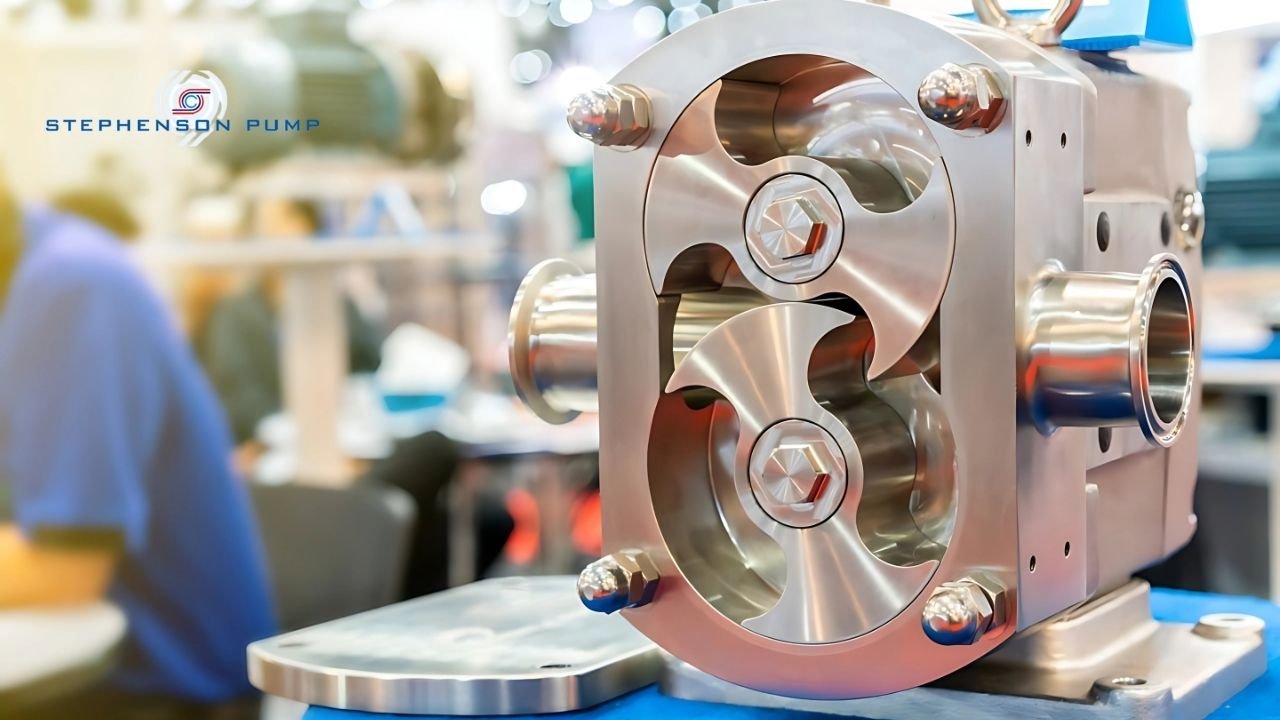
What is a Rotary Lobe Pump and How Does It Work?
A rotary lobe pump is another type of positive displacement pump that uses two or more lobes rotating in opposite directions to transfer fluids. The lobes create a cavity that traps fluid and moves it from the inlet to the outlet. Unlike vane pumps, lobe pumps do not have sliding parts in contact with the pumped fluid, making them suitable for handling viscous or abrasive materials.
Key features of rotary lobe pumps include:
- Gentle handling of shear-sensitive fluids
- Ability to handle high-viscosity fluids and solids
- Easy maintenance due to fewer wear parts
At Stephenson Pumps, we offer the best rotary lobe pump solutions designed for durability and efficiency. Whether you’re handling food products, chemicals, or wastewater, our pumps deliver unmatched performance.
Key Differences Between Rotary Vane vs Rotary Lobe Pumps
| Feature | Rotary Vane Pump | Rotary Lobe Pump |
| Design | Uses sliding vanes in a rotor | Uses rotating lobes |
| Fluid Handling | Best for low-viscosity fluids/gases | Ideal for viscous/abrasive fluids |
| Maintenance | Requires regular vane replacement | Easier to maintain with fewer parts |
| Efficiency | High efficiency for gases/vacuums | Better for high-viscosity fluids |
| Noise Level | Quieter operation | Slightly noisier due to lobe design |
Not sure which pump is right for your application? Reach out to Stephenson Pumps for expert advice and the best rotary lobe pump solutions!
How to Maintain a Rotary Vane Pump
Proper maintenance ensures the longevity and efficiency of a rotary vane pump. Here are some key maintenance tips:
- Regular Inspection: Check vanes, seals, and bearings for wear and tear.
- Lubrication: Ensure the pump is adequately lubricated to reduce friction and heat.
- Cleanliness: Keep the pump and surrounding area clean to prevent contamination.
- Vane Replacement: Replace worn-out vanes promptly to maintain performance.
- Monitor Performance: Watch for changes in noise, vibration, or output, which may indicate issues.
Need replacement parts or maintenance services? Stephenson Pumps has you covered with top-quality components and expert support.
Why Choose Stephenson Pumps?
At Stephenson Pumps, we pride ourselves on delivering the best rotary lobe pump and rotary vane pump solutions for a wide range of industries. Our pumps are designed for reliability, efficiency, and ease of maintenance, ensuring you get the most out of your investment.
Whether you’re looking for a pump for vacuum applications, high-viscosity fluids, or abrasive materials, we have the expertise and products to meet your needs.
Ready to upgrade your pumping system? Contact Stephenson Pumps today to explore our range of high-performance pumps and find the perfect fit for your application!
I see something really interesting about your weblog so I bookmarked.
Thanks for giving your ideas. The one thing is that learners have a solution between government student loan as well as a private education loan where it’s easier to opt for student loan debt consolidation than through the federal student loan.